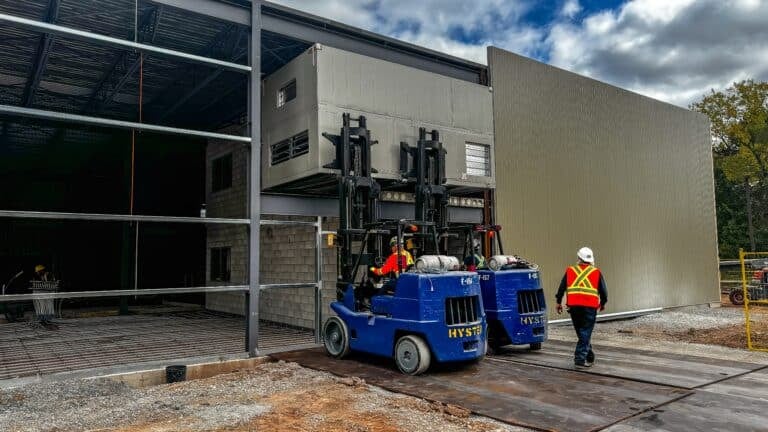
If you want to work with machinery movers and relocate heavy machinery, focusing on the electrical side of things is extremely important. The truth is that a lot of the time, relocating machines requires a lot of commitment and a great array of tools. Plus, mechanical and electrical issues can ensue and appear randomly, out of nowhere. You need to be prepared, and here you have a list of how you can avoid such problems when you relocate machines.

What kind of failures can appear during the relocation process?
- Vibrations that happen during transport can loosen connections
- You might end up not calibrating the software or sensors after moving
- Leveling or foundation issues lead to mechanical stress
- Incorrect phase connections and voltage can prove to be very problematic
- Dust contaminations or moisture ingress can also be extremely difficult to deal with
- An improper reassembly can sometimes lead to torque issues or an imbalanced load, among many others
These issues are common if you don’t take them into account and prepare beforehand. The quicker you prepare, the better it will be, and you really want to focus on getting the best experience and results. What really matters is getting the best outcome and experience, and once you do it properly, the potential can be second to none in no time.
Perform an adequate condition assessment
You do want to be sure that you check everything from the electrical connections to the mechanical fasteners, lubrication systems, protective covers, guards, control systems and many others. Check if everything is ok and note if there are problems. Although it does help if you perform any repairs beforehand.
Confirm the power compatibility and clean supply
Sometimes, having an incompatible power source can lead to various risks. Match the voltage rating of your equipment with the supply that you have at your new site. Additionally, you want to confirm phase matching and measure the frequency. Inspecting the circuit breaker and fuses to ensure that they have the right ratings is also a thing that you need to consider here, so use that to your advantage.
Verify bonding and grounding
Inadequate grounding or missing grounding can lead to electrical issues. What you want to do is to be certain that all grounding wires and lugs are fastened properly and that you verify the machine chassis. Using a multimeter to confirm any low resistance paths between the ground and equipment are going to help a lot more than expected. Checking if the ground fault circuit interrupters are installed where you need them, that will help too.
Level and align all the mechanical systems
When you do any machinery moving, you will notice that there are a ton of mechanical systems that you need to keep in mind here. Motors, spindles, rollers, rotating shafts, these need to be very well balanced. Any vibration can lead to failure and wear, which is obviously the type of thing that you really need to avoid as much as possible. Using some alignment tools like a laser shaft, things like a dial indicator or an inclinometer will help quite a bit as well.
Calibrate controllers and sensors
When you do any machinery moving, the truth is that you can end up throwing off sensors, limit switches, load cells and so on. You do want to make sure that the machine works the way it should when you restart it, as that will give you the best possible results. When you recalibrate stuff, you can focus on the servo motor encoders, pressure and temperature sensors, safety interlocks, proximity switches and weight sensors, among many others.
Recondition or replace any worn components
If the machines you relocate have any worn components, try to replace or at least recondition them. You do want to ensure that those components work the way they should. And if they are worn, that can be extremely problematic, so it helps to avoid those things the best way that you can. Some of the common parts that deal with wear and tear are chains, belts and couplings, gaskets, seals, but also bushings, hydraulic hoses, chains and so on. Some predictive maintenance checks like oil sampling, vibration analysis or thermal imaging might help you identify some early stage failures.
Do some manual mode tests
A lot of the time, machines will have a manual mode that’s great for doing any tests. After you relocate the machine, you want to do those tests, and see if there are any strange smells, a lot of vibration or any unusual noises. You also want to be certain that you have the interlock systems and any safety stops working the way they should. Also, using any amp meters to ensure that the motors draw only the amount of power they need, that will help you quite a bit. As you do that, it also helps if you monitor the pressure and temperatures, so you can have the best and safest operation, so try to keep that in mind.
Retrain your team
When you do any machinery moving, the control system or layout might change. What this means is that you have to retrain your team the best way that you can. It will help ensure that your team knows how to operate the machinery after these changes, and it will streamline the process much better than you would expect.
But at the same time, you don’t want to just leave things there. Monitoring the machine closely for the first 30 days is going to help, too. The idea here is to add vibration sensors and see if the condition worsens or if there are any problems. Try to perform some daily inspections for the first week, to ensure that it all works adequately. If there are any anomalies, you should have a log book detailing all of these potential issues, as that’s certainly crucial to take into consideration.
Document everything you can
Once you have the machine in the new spot, you calibrated it and did all the tests, it’s important to document every single detail that you can here. That way, it will be much easier to narrow down what issues arise, what causes them, and how you might be able to solve those problems in a way that’s dependable and comprehensive as well. With that in mind, you should check the new control layouts and wiring layouts.
At the same time, you want to document things like the calibration settings, alignment offsets, leveling data, torque specs, but also the maintenance plans related to the new location. Of course, if there are any repairs made during the reinstallation process, it helps if you document them as well. Documenting stuff helps because it makes auditing easier, and you can also diagnose potential issues, too.
Conclusion
We believe it’s very important to do all these things if you want to prevent any mechanical or electrical failure after you relocate a machine. Of course, working with great machinery movers can help eliminate any potential concerns, while streamlining the process and making things much easier. In the end, what matters is to keep your machine working at the right parameters. Avoiding failures, be it mechanical or electrical, can help increase the lifespan of the device, while ensuring it will all work correctly in the long run!