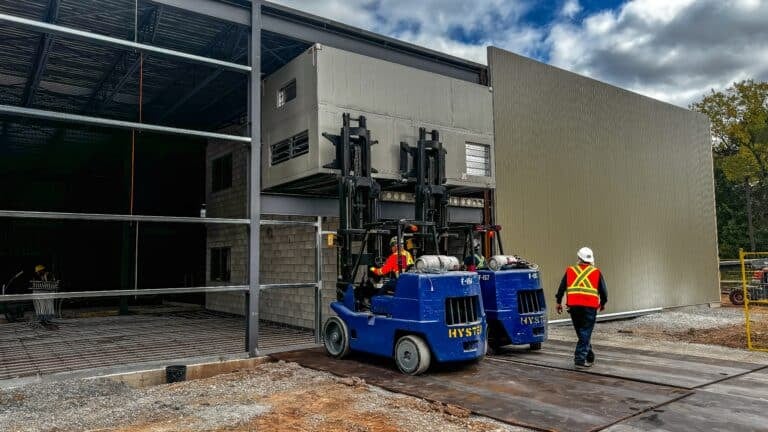
All machinery movers in Toronto know that relocating industrial equipment can be very time-consuming, challenging, and it definitely has its own issues. But the truth is that you will encounter all kinds of problems, which can lead to downtime. You need to have adequate heavy haul compliance in Canada, but at the same time, you also want to focus on reducing downtime as much as humanly possible. And that is going to be easier to handle, much easier than you might expect.
Perform a pre-move assessment
The idea behind this is that you want to figure out the operational impact, the overall industrial equipment that you are using right now, and all kinds of different things to focus on. During this process, you really want to study the production dependencies, but also the machine condition, site readiness, utility requirements, etc. Having all that info is great because it can help you uncover some of the hidden risks that do arise at times. Plus, having all the info available eliminates many of the problems, while pushing the limits more consistently and cohesively, which is nice.
Build a relocation plan
If you want to reduce downtime, then you need to have a relocation plan. The idea here is to have the project deadline, the disassembly and re-assembly process and timeline, what permits you need, any industrial equipment, but also the utility shutoff plans as well. And then, we have vendor responsibilities and contract requirements. Even then, you have the contingency time buffers as well, something that you always want to think about as much as possible.
Use any cross-functional teams
The role of this approach is to help ensure that you get all the best people in the business for that specific niche that they are covering. You will need production managers, but also the maintenance engineers and safety officers. And of course, you also need OEMs or original equipment manufacturers who specialize in industrial equipment. The main role is to deliver technical support for industrial equipment where possible, without diminishing any of the issues that could arise.
Pre-stage where possible
A very good downtime strategy is to prepare before the shutdown. The idea is to build supports, bases, and platforms ahead of time, as it always helps when handling industrial equipment more than expected. And the same thing is valid when it comes to running plumbing, wiring, and conduit before the moving day. The more information you have about your industrial equipment here, the better it will be, and that’s certainly the best approach that you can have, so use that to your advantage.
Schedule your own strategic shutdown windows
The reason why you want to do that is that it helps you save quite a bit of time. You will need to align the relocation of your industrial equipment with planned maintenance, seasonal production slowdowns, shifts with minimal output impact, or holidays. That way, it becomes much easier to handle the process, and it will surely eliminate any possible concerns or issues that arise, which is something to keep in mind here.
It always comes down to having a smart timing system in place. Not only will that help reduce any operational disruption, but it will also lower the labor costs. The more you think about minimizing downtime, the less it will cost your company to move these pieces of industrial equipment. And of course, you also want to share that info with the machinery movers in Toronto, where possible. It only makes the process better, while improving the experience in more ways than you might expect.
Using advanced technology
That’s the thing, you also want to make sure that you rely on tech for minimizing downtime during industrial equipment relocation. And that’s helpful mainly because it helps provide more consistent value, and you will appreciate the way it all comes together. It only allows you to focus more on the experience, and it can help provide consistency and ease of use more often than not.
But what tech can you use here? There are tons of different technologies, including 3D laser scanning, along with CAD-based layout simulations, digital twins, and so on. Then you can delve into asset tracking, RFID, or telematics. Yes, with telematics, it will become much easier to access real-time industrial equipment relocation monitoring, and it’s simple stuff like that which will help streamline the process.
Digital tools are excellent when it comes to reducing downtime. They are very precise, and their focus is to always reduce errors while also ensuring that you have no delays. And in the end, that’s the thing that matters: you want to implement it cohesively, and in doing so, it will only make the industrial equipment relocation process better.
Perform any preventative maintenance during the downtime
The reason this helps is that it allows you to service the industrial equipment properly and remove any issues or problems that can sometimes arise. Some of the recommended tasks during this time would be to replace worn components or even upgrade the outdated systems. Inspecting the cooling systems and lubrication will help a whole lot more than expected.
During this time, you also want to update controls and software, where possible. You already have downtime, so you might as well implement consistent results, and the experience as a whole will be more cohesive in the end. And of course, you can replace seals, bearings, belts, and so on. All of that matters because you get to eliminate a lot of downtime, and it’s totally something to consider here.
Optimize the reinstallation procedures and disassembly
The important thing here is that you want to speed up the work and reduce errors where you can. With that in mind, there are plenty of tasks that you can do, and they provide excellent potential, which is something to consider. For example, you can use color labeling for parts, hoses, and cables of your industrial equipment, so you won’t dismiss them, and that will be a problem.
The same thing is valid if you photograph or video record the disassembly. Knowing where every little piece of industrial equipment goes matters quite a lot, since you can prevent a lot of potential problems. Plus, the machinery movers in Toronto will finish their work, and you can reassemble your industrial equipment in a way that’s more consistent and something you want to focus on as much as possible.
Aside from that, you also want to have a reassembly checklist that goes step by step, and that alone can help quite a bit. Plus, you want to have a parts inventory that helps you avoid having any missing hardware, something that also matters quite a bit when working with industrial equipment. And on top of that, you want to use OEM-certified technicians and experienced riggers for the entire process. Reinstallation of industrial equipment can be tricky most of the time, so approaching that in a way that’s more cohesive and consistent will help you more than you might expect, so keep it in mind as much as you can for the best possible outcome.
Prepare the new site
Now that you have optimized the reinstallation procedures, you also want to prepare the new site. That’s always a bit of a challenge, because it will take a lot of effort and time to manage everything. In this case, you want to verify the grounding, floor load ratings, and safety barriers, and you also want to have clearance around the industrial equipment. Add to that network connectivity, and you can see there’s a lot of stuff you need to focus on. Preparing the site for industrial equipment is going to eliminate rework and problems, and naturally, it reduces downtime, which is exactly what you need to pursue here.
Communicate often
That’s the thing, you also want to communicate often and as effectively as possible. Communication issues will lead to delays and downtime, which is something that you want to prevent in the best way that you can. When it comes to communication, you want to have real-time updates, daily briefings, along with clear progress reporting and defined escalation procedures if there are any concerns or problems.
Perform calibration and testing
After you reinstall the industrial equipment, you want to ensure that you know how to test and calibrate everything effectively. And that’s the thing, approaching it cohesively will matter, and it will provide more consistency a lot of the time.
You want to do things like power-up checks, controlling calibration, verifying the alignment, testing the safety systems, and even doing some trial production runs. The faster you address that, the better it will be, and it will provide a more cohesive and consistent value, along with pushing the boundaries every single time.
Conclusion
Clearly, there are various tasks you need to do when you relocate industrial equipment, as you will be able to reduce the downtime and push the boundaries in very consistent ways. At the end of the day, having the right procedures in place will help quite a lot, since you can have a faster restart and less downtime. It’s not an easy thing to achieve, but with these tips shown above and the best machinery movers in Toronto, you can streamline the experience!