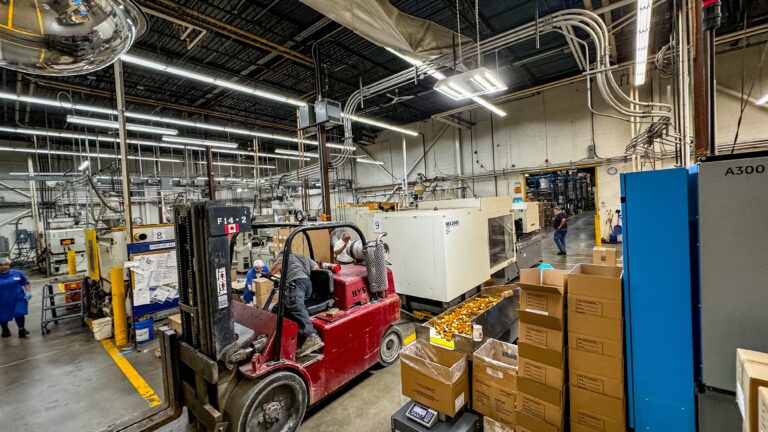
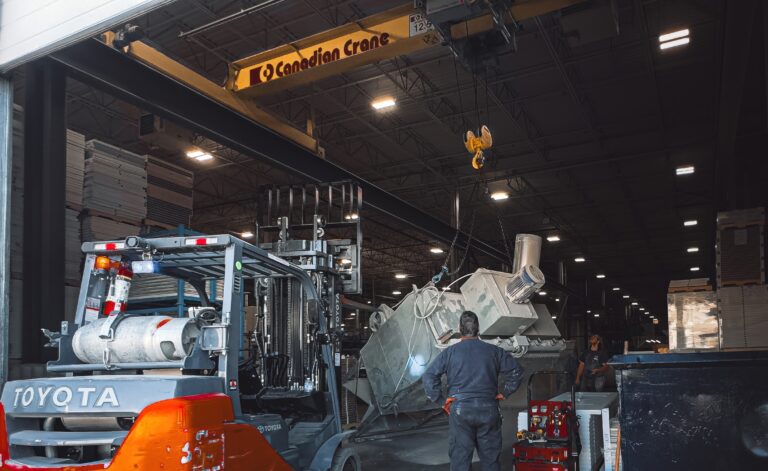
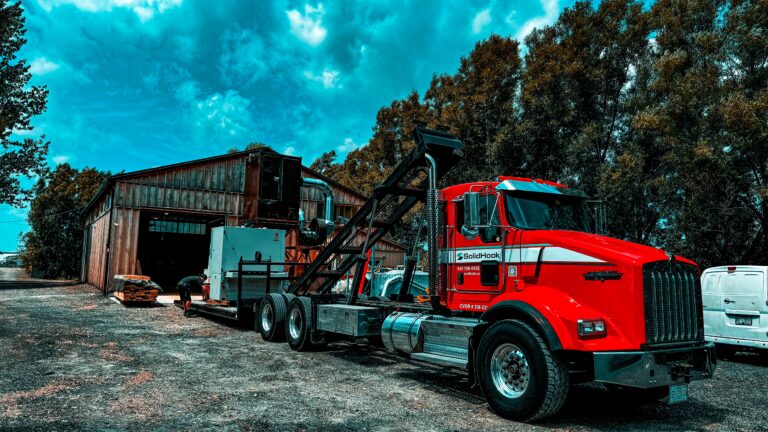
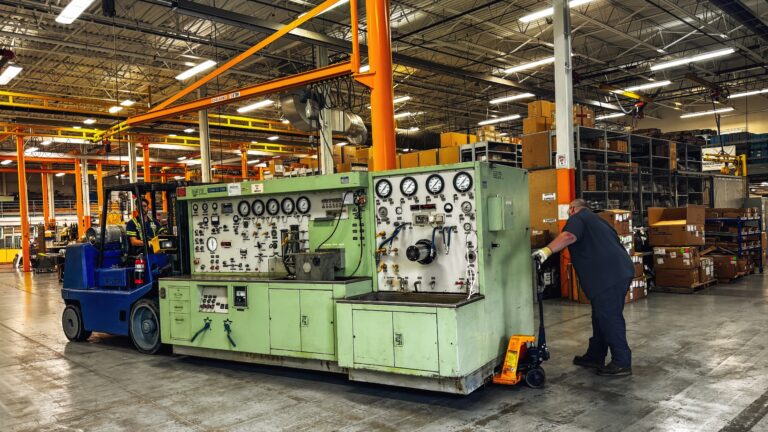
Relocating an industrial plant is a process that requires a lot of commitment and professionalism. When we talk about Machinery Moving and plant moving at this level, it involves a lot of engineering, production, but also continuity planning as well. That’s why you want to be focused on planning everything appropriately and understanding the process evenly. With that being said, it makes sense to learn about phasing, sequencing and other processes similar to that.
What phasing and sequencing mean in plant moves?
During Plant Relocation, you will encounter various requirements including sequencing and phasing. These are processes designed to streamline the plant move, and to make it simpler and easier. With that being said, phasing is designed to divide relocation into smaller, easier-to-manage stages. Then, we have sequencing, which is defining the order where the tasks are occurring.
During a plant relocation there are different phases, which can include:
- Pre-engineering and documentation
- Then, you are preparing the destination site
- You are isolating, then disconnecting utilities
- After that, you are dismantling equipment
- Once you do so, you are transporting and staging
- There’s also reinstallation and alignment
- At the end, you have commissioning and of course, validation for the process
When it comes to sequencing, the focus here is to make sure that all dependencies are respected properly. That means you must isolate the utilities before you do any dismantling. The foundation of the new site needs to be cured before you start adding any equipment. And of course, any electrical rough-in must be complete before you are starting to place any of the machines. All of that is incredibly helpful, and it can provide excellent potential.
Role of engineering drawings and site planning
When you are relocating an industrial plant, this is a process that requires adequate site planning and engineering drawings. Without those, reinstalling the equipment and having the previous performance is close to impossible, and that’s the thing that you want to focus on the most here.
In regards to documentation, this usually involves GA drawings, mechanical layouts, electrical schematics, piping and instrumentation diagrams, foundation drawings, utility distribution maps, control system architecture, etc. Also, before you dismantle stuff, the equipment should be photographed, laser scanned, labeled and tagged, but also marked for any alignment references.
When you are reaching the destination site, you must confirm the floor loading capacity, design new foundations, route the gas, chilled water, steam or compressed air. And of course, you also want to plan the cable trays and the control panels. Lastly, you will need to verify clearance for the maintenance access. A lot of the time, relocation becomes a great opportunity for you to optimize the layout. That means you can make changes which help improve the workflow, boost safety and reduce any material handling resistance, something to keep in mind.
How production continuity is protected?
When we talk about relocating an industrial plant, it becomes very challenging to protect the continuity of your production. And that’s the thing, your focus has to be on ensuring that everything is streamlined and it all works properly. You can use a multitude of strategies here, including:
- Parallel installation is a very good idea to consider. The idea here is to install and dismantle stuff as a parallel process, so nothing gets disturbed. Yes, it involves more capital and expenses, but the ROI is much better in the end.
- If you don’t want that, the alternative is to do a staggered line move. The idea is to relocate a single line at a time. That means you can keep the other lines, but it’s going to lower your production capacity. And it’s definitely important to try and address this with the utmost focus and attention.
- Buffer the inventory as well. For example, you can increase the semi-finished and finished goods inventory before the move. That will help you cover any of the downtime, while also saving a huge amount of effort and time.
- And of course, there’s also the option to outsource some of the stuff as well. Outsourcing some of the work is a good idea during a transition period, because it will help save time, effort and streamline the effectiveness of your business in the long run,
Any of these strategies can work very well, but things vary based on the margin sensitivity, product demand, not to mention the customer tolerance for the supply interruptions. That’s extremely important to consider, because every single element could prove to be crucial in these situations.
Coordinating moves around live production
Maybe the primary challenge for most businesses when relocating is that it’s hard to coordinate moves around live production. That’s because you have complex things to deal with, such as noise restrictions, limited access windows for cranes, but also segregation of work and a strict lockout procedure.
Because of that, you have to work around the existing production schedules. And what you can do is to work overnight, during the planned maintenance shutdowns, over weekends or in controlled time blocks. It’s a compressed, tricky schedule to deal with, but you have to adapt to it, otherwise you will encounter several challenges that will make the relocation process infinitely harder.
How multiple trades work together during relocation?
The thing to note here is that during industrial relocations, you have multiple specialized trades working together. You have Millwrighting along with electricians, pipe fitters, riggers, civil crews, not to mention control engineers and safety personnel. That’s the thing, these trades are not operating independently. They will overlap a lot of the time and thus they depend on one another.
For example, riggers will be the ones positioning the equipment, but the millwrights are the ones that perform the alignment process. Then, we have electricians that terminate power only after the mechanical anchoring is complete. Then, the controls engineers validate I/O after the physical connections are restored.
Of course, these processes are not simple. They require a lot of coordination, sharing schedules, adapting and figuring out how every single process can be streamlined, etc. The truth is that you always want to avoid downtime and conflict. And if you do, once you have the right timeline in place, it will be well-worth the effort every single time.
Commissioning/performance validation
Mechanical placement is not the end of the reinstallation process. Instead, the commissioning process makes sure that the system is operating the way it should. That’s why you are going through processes like mechanical alignment verification, utility pressure, leak testing, PLC program validation, dry cycling, trial production runs, quality verification and many others. And of course, you also need to do some comparison between the baseline data and current performance metrics.
Additionally, it’s important to focus on risk management and having a contingency plan. In this case, you need to have critical path scheduling, equipment damage contingency plans, not to mention redundant suppliers, considering the backup power and any weather-related transport delays.
Conclusion
As you can see, industrial plant relocation is very challenging, and it has a lot of moving parts. That’s why it’s important to hire the right experts which will help take this experience to the next level. It’s not going to be a walk in the park. However, with the right planning and systems in place, you will find it much easier to relocate your plant effectively and not deal with any problems. Just make sure that you’re addressing this wisely, focus on each aspect of relocation, and results will be excellent!