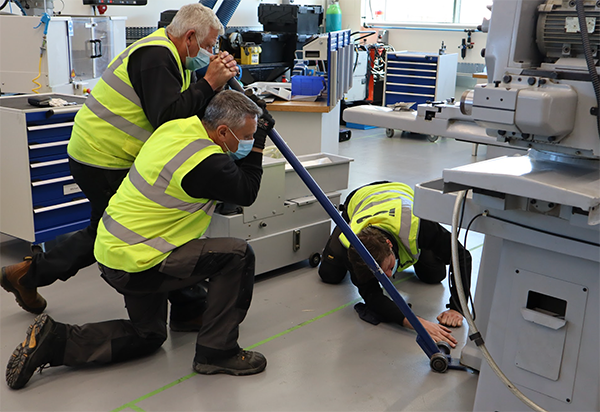
When we talk about heavy machinery moving, there are all kinds of issues and liabilities that can arise. That’s why it’s incredibly important to focus on the potential problems that appear, and narrow down ways to solve them. The great thing about insurance is that it can help protect you, in case things go wrong. With that being said, a lack of insurance can lead to legal disputes, delays and so on. It’s imperative to have some type of protection, and with the right machinery movers you can get that done in no time.
Why should you consider insurance for heavy machinery moving?
Regardless of what machinery movers you use, the truth is that there are always unknowns when it comes to the moving process. Issues can arise at any given time, and mishandling heavy machinery can cost you millions of dollars. The last thing you want is to deal with issues like accidents, theft, transit problems or damage and so on.
What type of insurance coverage should you go for?
That always depends on the type of cargo you are relocating. You can opt for all kinds of options to consider, each with its own set of benefits. That does bring the question, what should you focus on when it comes to insurance? Here’s what you need to consider.
Cargo insurance
It can be great for machinery moving, because it will protect you against physical damage or loss during transit. It usually covers ocean shipping, overland transport and other similar solutions. That’s why it can totally be one of the best options to think about, especially when it comes to value and great results.
Liability insurance
Yes, you can also get this type of insurance because it helps cover property damage or injuries. Problems like that can sometimes arise during the time you are relocated. And that’s why you want to address everything wisely, and insure the items you’re transporting.
Contractor’s equipment insurance
In case you will need to rent equipment or even if you already own it, having such insurance is very effective. It’s great for machinery movers, since it covers the items in transit or storage as well.
Worker’s compensation insurance
If any of the workers handling the heavy equipment during relocation are injured, this type of insurance will cover everything. Yes, it’s designed to prevent any concerns that arise, and realistically, it helps provide a peace of mind that could be difficult to access otherwise, so keep that in mind,
Trucking and automobile liability insurance
When you have very large loads, like heavy equipment, it does make sense to have this type of insurance. That way, whenever something happens to your equipment, the insurance coverage will step in, and in doing so, you will have a much better result than expected.
These are various insurance options that you will be able to use with heavy equipment relocation. As you can see, each type of insurance has different coverage, but it always depends on what you want to cover and the possible challenges that arise. At the end of the day, insurance is crucial for machine moving, and it will help you avoid any losses or problems that could arise.
Liability allocation
One thing that’s incredibly important when it comes to liability related to machinery moving is contract clarity. It’s imperative to be certain that the contract is clear and all the information is shared without any issues. You must define who is responsible and for what at any step of the entire process.
Moreover, you also have to think about indemnification clauses. You must be certain that contractors will all assume liability, if they make any mistakes. And in a situation that will not happen, your focus is on having insurance that will cover any of those problems. It helps immensely, and it will provide you with the peace of mind that’s very much needed when working with machinery movers.
Another thing to consider here would be the certificates of insurance. That means you need to verify the insurance of your subcontractors before they handle the equipment. Clearly, it will be a bit problematic to narrow down whether a subcontractor will cover any specific repairs, so you really need to be wary of problems. Addressing those beforehand and knowing what their insurance covers and what doesn’t, that matters quite a bit.
Also, with the contractual agreements, you have to narrow down the joint liability risks. A lot of the time, you may have to share liability with other contractors. That’s why you want everything to be properly handled and outlined. Implementing those systems appropriately and creatively will allow you to focus on results more. And once you start doing that, it will protect your business. Once you have unknown problems that arise, it will only make things worse.
Best practices when it comes to risk management
What you have to realize is that whenever you deal with machinery moving, there are always inherent risks that arise. And the only thing you can do is implement systems that will provide you with additional safety. At the end of the day, you can never be too careful. So yes, you do want to have a good risk management system in place, because that will help quite a lot. And the faster you start adding these systems in, the better it will be.
- It always pays off to do a route and site assessment. The idea is that you want to see whether there are any issues or not. And if there are issues with the site, you can address those on the spot. Changing the route could also be very handy, and it will certainly provide a much better, more consistent result going forward.
- When choosing machinery movers, use only insured, bonded and licensed professionals. Why is that? It helps alleviate any risks, and you can prevent any potential issues that arise. The more you focus on that, the easier it will be to streamline everything.
- Train the employees and implement any safety protocols. One of the upsides here is that you can start training the employees asap. They will know how to avoid problems and protect the heavy machinery from any damage.
- It also comes in handy to perform pre and post relocation inspections. Ideally, you want to create reports for all of this. Once you do so, you can ensure that there are no possible issues with the systems in place, and if there are, you can try to solve those before the heavy machinery arrives.
- Needless to say, but you always want to comply with the local and federal regulations. That means you have to plan the route, see if there are any overweight/oversized permits required and anything of that nature. It’s important to plan everything with the utmost detail and once you do that, it will be a much simpler process to handle. Do it properly, and it will help you save a significant amount of time.
Pitfalls that you want to avoid
Whenever we talk about heavy machinery moving, it’s very easy to deal with all kinds of potential problems. The most important thing when it comes to this kind of stuff is to understand what general liability covers. It’s a mistake to think it will cover everything because a lot of the time, that’s not the case at all. And on top of that, you also want to see whether there are gaps in coverage as well.
You can even go further and see the policy exclusions. As always, there can be various policy-related issues that could arise, and it’s imperative to try and address those as quickly as you can. Neglecting the cross-border considerations when you do machinery moving is always a problem, too. That’s why you have to be extremely careful with this, as it’s totally worth considering any issue.
At the same time, you also need to realize that liabilities can arise from a variety of things. Heavy machinery moving is a complex task, and obviously there will always be pros and cons. But the advantage is that once you start implementing the process and systems stated above, it’s easier. Plus, it becomes much simpler to tackle liability problems if you know how to adapt and implement everything appropriately. Yes, it’s a challenge, but it’s always worth the effort, so you have to use that to your advantage in the end.
Conclusion
As you can see, machinery moving involves a lot of logistical challenges. You have to address liability problems, but also the financial challenges that can arise from these problems. It’s never easy, and you really have to do proactive risk management. Having clear liability agreements is even better, as it will help eliminate a lot of issues as well. Make sure that you’re addressing those things appropriately, and always take precautions like having additional routes or extra plans. And, of course, adequate insurance coverage is a must-have, especially when it comes to heavy equipment!