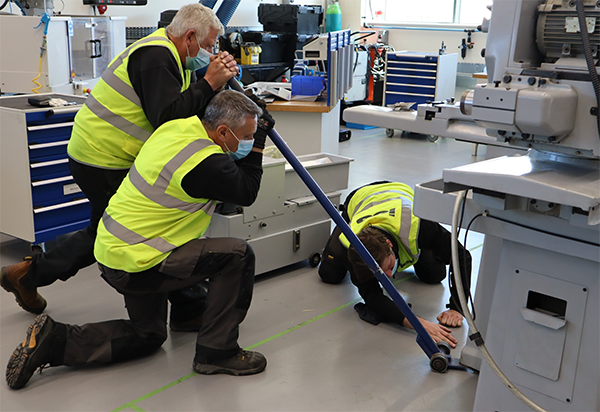
Moving large machinery can be very difficult, because it’s a complex logistics task, but also a very fulfilling one. That’s why it’s very important to plan every single step of the moving process. Working with professional machinery movers like Solidhook is a very good idea. But on top of that, you also need to have meticulous plans that offer coordination, improved safety management, engineering analysis and everything in between. Your focus is to obtain the best results without disruption.
Project assessment
Naturally, it all starts with an adequate project assessment. Your focus is to make sure that you are getting an excellent result and experience, and that you don’t have to worry about any project issues. A project assessment needs to cover the purpose of the move, but also equipment evaluation. Study the piece, its dimensions, weight, center of gravity, structural integrity, the fragility of components, sensitivity to vibrations and so on. The more you know about the machinery you need to move, the better the results will be.
Perform a site survey and proper route planning
Another major thing you want to do is to have a detailed survey of the site. You want to see the width of the doors, floor load capacity, ground conditions, obstacles and so on. The idea is to know what the target site looks like, the results you can expect, and what ROI you can get. In the end, it will lead to a much better experience, and that’s something to take into consideration here.
Then, there’s route planning. You will need to study the route and see if there are any restrictions or limitations that you need to know about. For example, there can be capacity and road load limits, sharp turns, overhead power lines, declines and inclines that you need to know. And then there are traffic conditions which can be problematic. Doing some route planning will help you get past problems like that, and focus more on the results as a whole.
Risk assessment
Are there any risks when it comes to going on the road? Sometimes, there can be some, other times less so. Hazards will arise especially if you have a longer route. These can be anything from crane failures to personnel injury, equipment tipping, electrical hazards, environmental damage and so on. Plus, you have to plan around stuff like emergency response plans, certified lifting equipment, some redundant lifting points, load monitoring systems, exclusion zones and so on.
Load calculations
It might not seem like much at first, but load calculations matter immensely, and they can indeed make a huge difference. For example, you will need to calculate the dynamic and static loads, lifting angles, sling tensions, ground bearing pressures and anything in between. Then, there are other things like structural analysis. You want to focus on the temporary supports you need, maybe you might require any modifications to access points or floor reinforcements. All of those things will matter a whole lot more than you might expect.
Picking the right machinery moving equipment
When you work with the right machinery movers, they will be taking care of all these processes. But in general, you need stuff like hydraulic jacks, gantry systems, mobile cranes, machine rollers and skates, forklifts, low-bed trailers and so on. A professional team of movers will be able to offer all of those and much more. That will help streamline the moving experience, and if necessary, they can also adapt with professional moving solutions that you might be needing, which is something to take into consideration here.
Preparation and disassembly
That’s the thing, you always want to make sure that you are preparing the machine to be moved safely. And a lot of the time, safety is paramount, hence the reason why you need to do a professional disassembly first. In this case, that involves removing any external components and disconnecting control systems, fluid and power. Of course, you also need to separate the machine into multiple sections, so you can transport it with ease and prevent any possible damage that might arise at times.
At the same time, there can be sensitive parts in these machines. If that’s the case, the idea is to protect these using moisture barriers, shock absorbing materials, but also moisture barriers. Simple things like that will help quite a lot, and it will help streamline the process in much better ways than you might expect.
Regulatory compliance
Naturally, you always want to comply with the industry guidelines and requirements. and when we talk about heavy or large machinery moving, a lot of the time you need regulatory approval. That involves getting permits, which are necessary for things like heavy loads, oversized loads, night transport, temporary road closures and so on. Proper planning is required here and when it comes to permits, you have to get them ahead of time. It takes a while to get permits, so that’s totally something you need to keep in mind here.
On top of that, we also have things like health and safety compliance. You do need to comply with the health and safety regulations of your local region. That means you need to have operator certifications, safety documentation, inspecting the equipment is also mandatory. All of those things matter, and any failure to comply will halt the project, which could end up costing you quite a bit of money.
Scheduling
That’s the toughest part when it comes to moving heavy machinery. You will need a lot of people here to make sure that the process works smoothly. Aside from the machinery moving company, you need to have rigging crews, crane operators, site managers, engineers and safety officers, among many others. It’s important to make sure that every single step is tracked appropriately and that there are no issues or worries that you will have to deal with. Ensuring minimal disruption, an efficient use of resources and no delays, that’s what matters the most in these situations.
Performing the machinery moving process
It’s very important to try and stick with the plan as much as possible. Make sure that you have the right amount of supervision, which is not going to be detrimental to this process as a whole. And on top of that, you do want to have a contingency management team that will streamline and handle this process. It will help adhere to weather changes, handle equipment malfunctions and any other issues that arise.
After the machinery is moved, you will need to offload and then reinstall it. Re-assembling can be difficult, as it is a tedious and quite challenging process. With that in mind, you want to follow the manufacturer guidelines and instructions, just to ensure that everything is working smoothly.
Conclusion
At the end of the day, machinery moving is something that requires a lot of planning and attention. But it also offers you excellent results and benefits, not to mention it can save quite a lot of time and effort. It’s highly recommended to avoid any rush, and just focus on streamlining the process the best way that you can. Just make sure that you are using the best machinery moving company, so you can plan and optimize the process for minimal delays and disruption.